Dealing with Waste Wool - Pellets
One of our biggest goals is to increase the transparency and traceability of our wool business and farm - and to also push for greater transparency of the broader Canadian wool industry.
The waste we produce in our business and what we do with it is an important part of transparency - and so we want to spend some time in the next month sharing some of the ways we have addressed this.
A few years ago I was introduced to the book The Lean Farm by Ben Hartman. He took the manufacturing principles from the Lean system and applied it to his vegetable farm - this made a big impression on me and shaped the way I view our mill and farm business.
The basic concept is to identify the value stream and minimize or remove waste and then utilize your resources efficiently to obtain the maximum results for the minimum cost.
We spent some time looking at ways we could just reduce the single-use products in our processing (this almost exclusively happens at the packaging/shipping stage of the business and is still a gut-punch every month).`
When we evaluated the wool mill we realized there were some big areas that we were producing ‘waste’
dirty waste wool from skirting (the bits we can’t turn into yarn)
clean waste wool from our carding machine
Spun yarn at the end of our bobbins and cones
Turns out this ‘waste’ is not really waste - but just underutilized resources from our business. How can we transform this ‘waste’ into something valuable and re-useable. We started with the dirty waste wool from skirting.
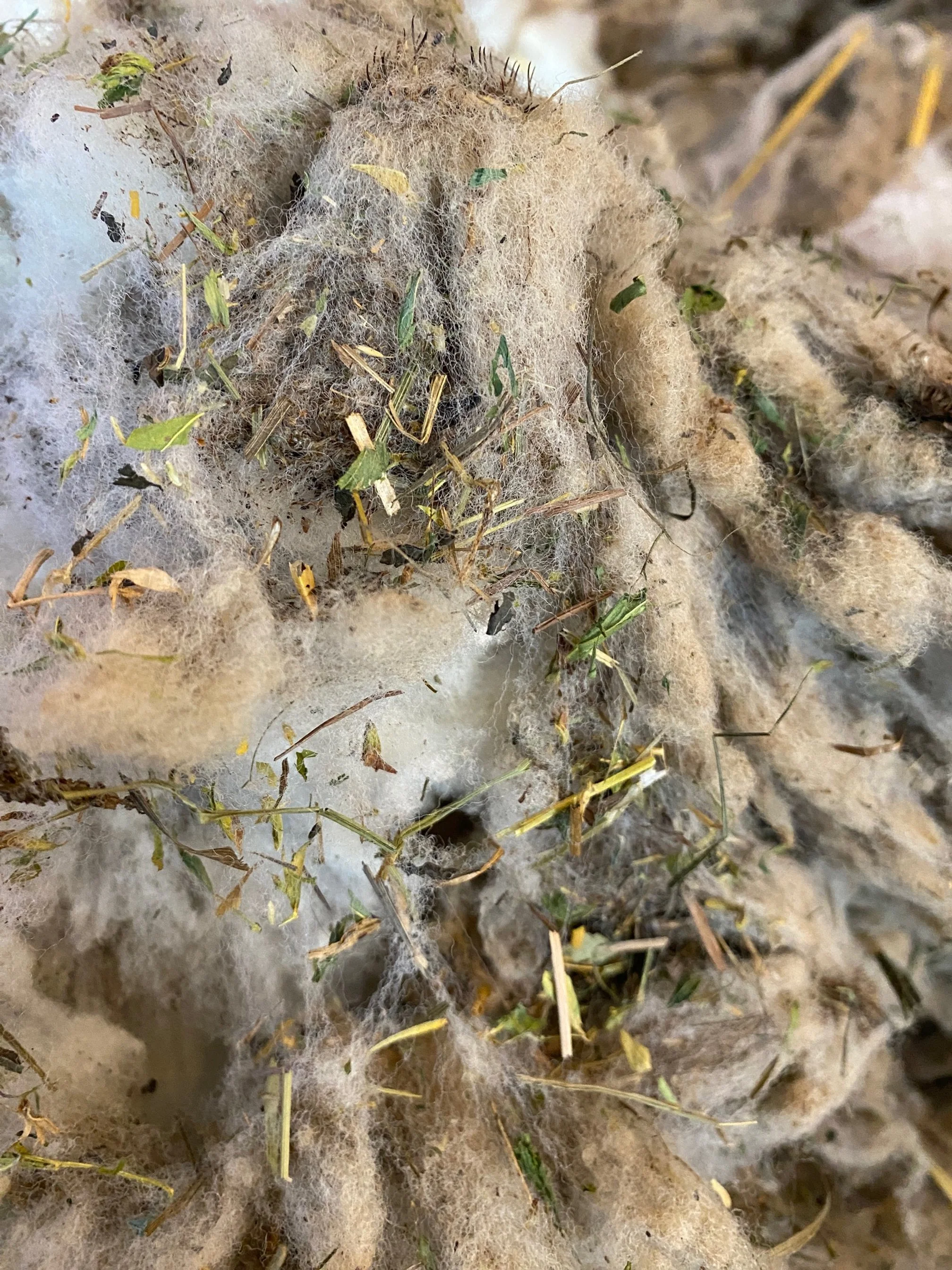
There is always wool from each sheep that is too dirty to turn into yarn/roving or other textiles. The contamination is usually veggie matter or manure - which in one context is waste - but in another are actually nutrients that can be transformed into soil amendments or ‘fertilizer’
We worked with an engineer in Indiana to get a pellet mill that will take the raw wool and using heat and pressure transform it into smaller compressed pellets that can then be sold in a more marketable format as ‘fertilizer’* for our gardens!
I won’t go on about all the benefits of wool in your garden (but if you haven’t read it before check it out on our website here)
We have eliminated the dirty waste wool from our mill and turned it into another revenue source - AND now we actually purchase wool from other farmers for pellets and prevent even more wool from ending up in waste streams!
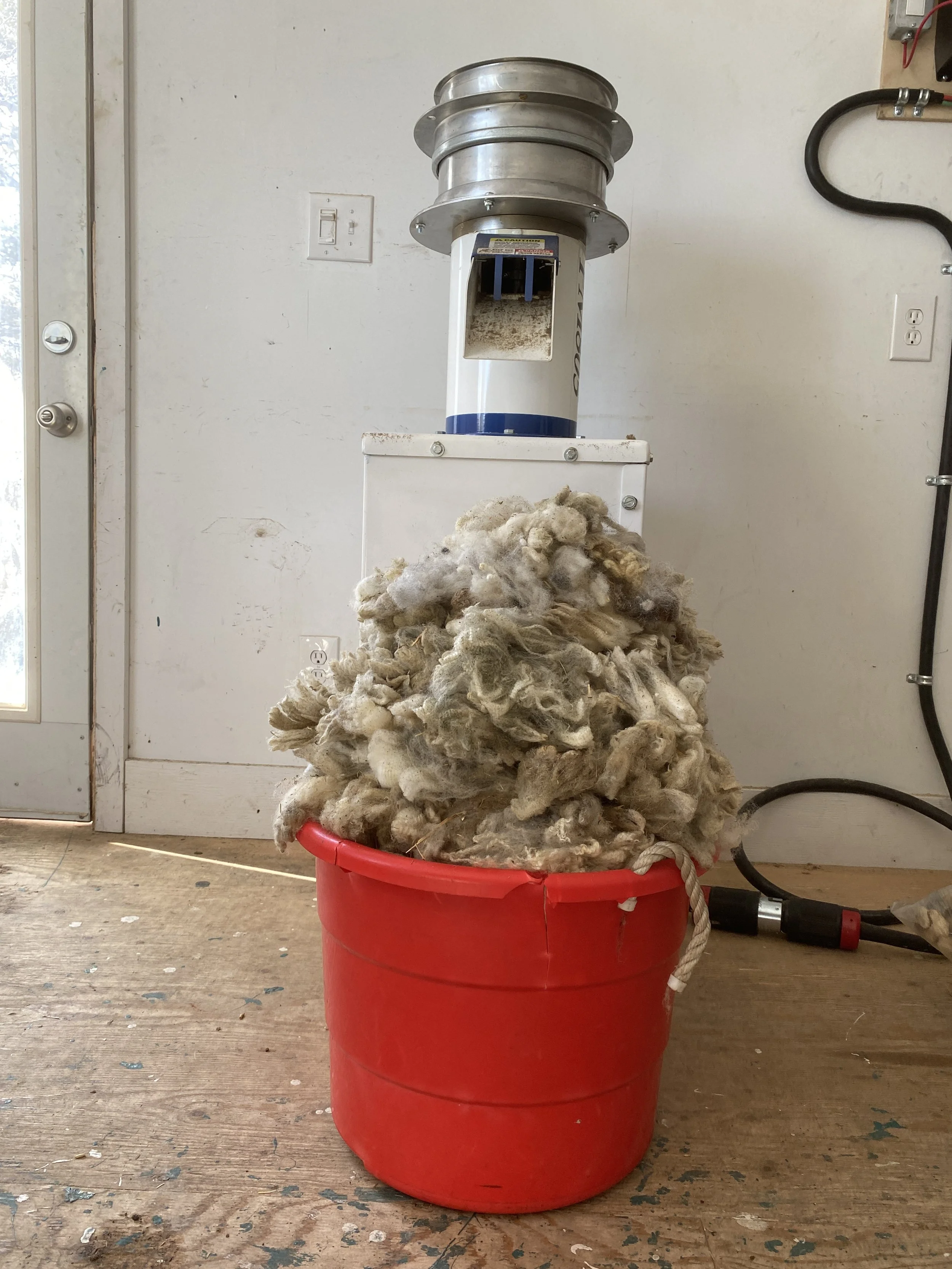
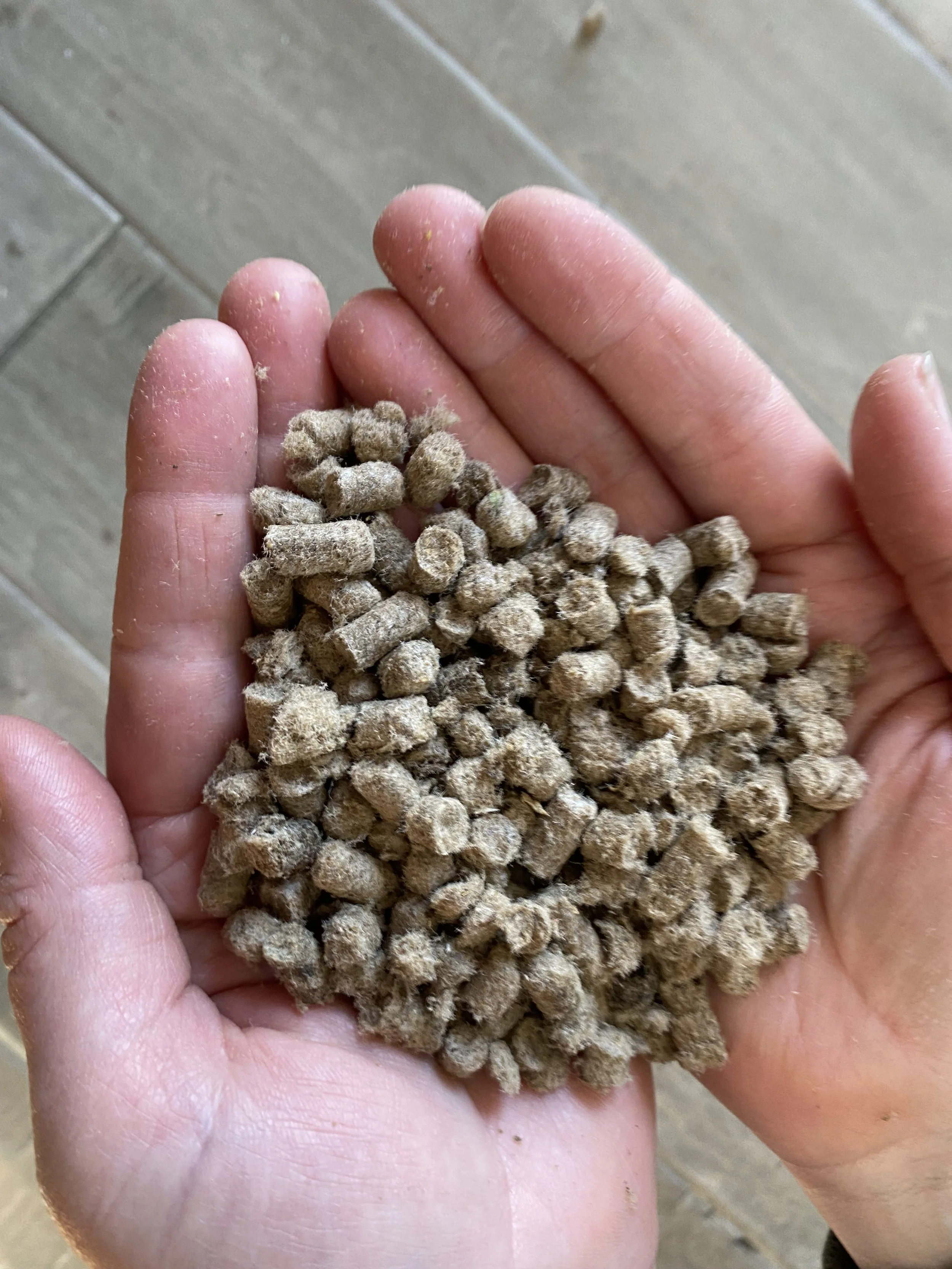
This is the exciting part for me - in our first year of pellet operation we have been able to keep over 2500lbs OF WASTE WOOL out of the waste stream in Manitoba.
This is exciting on a few fronts:
Zero Waste - Keeping that much wool out of the landfill/waste stream is in and of itself a victory (this was just year one of production for us, and we can increase that number)
Valuing Wool - We paid farmers above market rate for this wool. We are starting to change the way wool is valued in our region immediately because of the pellets. It also opens up the door for conversation with sheep producers about how to increase the value of their wool through management and proper handling.
Recycling Nutrients - The pellets made and sold were used in gardens across the region and returned those valuable nutrients back to the soil.
Replacing Synthetic inputs - Spreading the use and education of how wool pellets can be used is replacing the use of synthetic fertilizers in our gardens - what does this mean for the future?
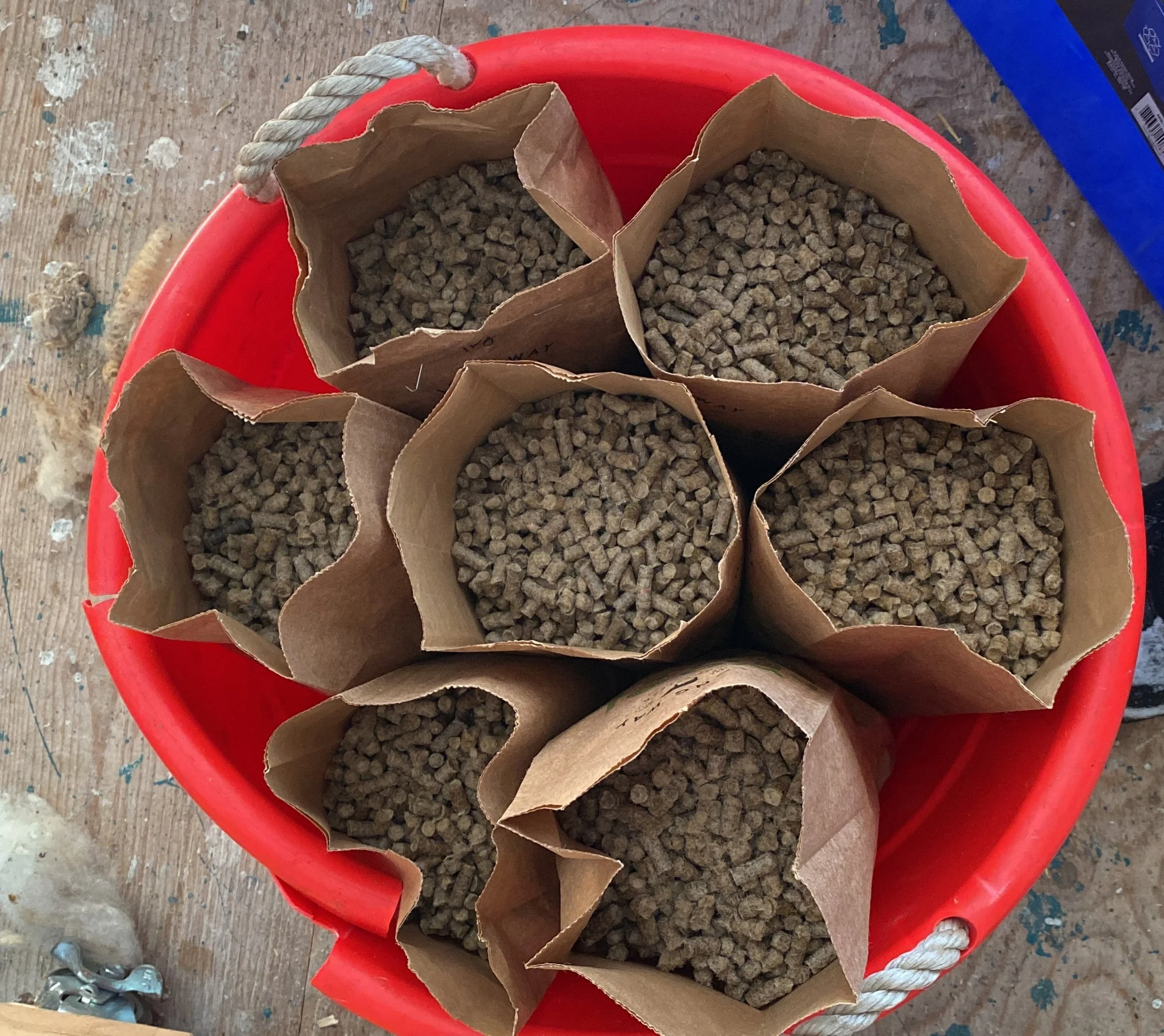
I’m very excited about the possibility of wool pellets for our own business and how it’s contributing to our ability to reduce our waste on farm and in the mill and reduce external inputs to our dye and food gardens.
But perhaps more so, I’m excited about the possibility that wool pellets can provide for the larger wool industry and the challenges we face today.
I don’t believe that wool pellets are the ONLY answer for our Canadian wool clip - but I believe it is ONE of the most immediate answers to the crisis we are in with the majority of Canada’s wool being underutilized and/or discarded.
I think wool pellets are an incredible REGIONAL response. Imagine if every region or Province had their own pelleting operation that could handle the dirty wool/waste wool and re-distribute pellets as soil amendments of that region. We would see a reduction in emissions from wool being shipped across the country to one central location (CCWG). This could create ‘hubs’ of wool activity and result in real compensation for sheep producers. Training could come next - how to skirt and handle wool properly to limit contamination and how to shift management practices to produce better wool.
These wool pellet hubs could also result in capital accumulation to put back into each region in the form of other wool processing infrastructure. It lays a foundation for regional wool processing, handling and distribution.
If you are a farmer/producer or entrepreneur or just a big wool enthusiast I produced an on-line course on how to start a small-scale wool-pellet operation. You can find that course here (and feel free to email with questions). It includes financial projections, start up costs, materials needed, packaging considerations and more.