Early October I found myself at the Campaign for Wool Canadian Wool Conversations event in Calgary. This is the second event they have organized with the intention of bringing people together to talk about the wool industry in Canada.
There was a full day of speakers and panel presentations with many interesting and important voices with the focus of the day being “Regenerating Landscape, Industry, and Community”
We were welcomed to Treaty 7 Territory with a presentation by the granddaughter of Boy Chief - from Boy Chief Trading Post. A beautiful and important welcome to the land by stewards of the Siksika Nation.
Context was provided for the event by what has happened in other jurisdictions like the USA and the UK
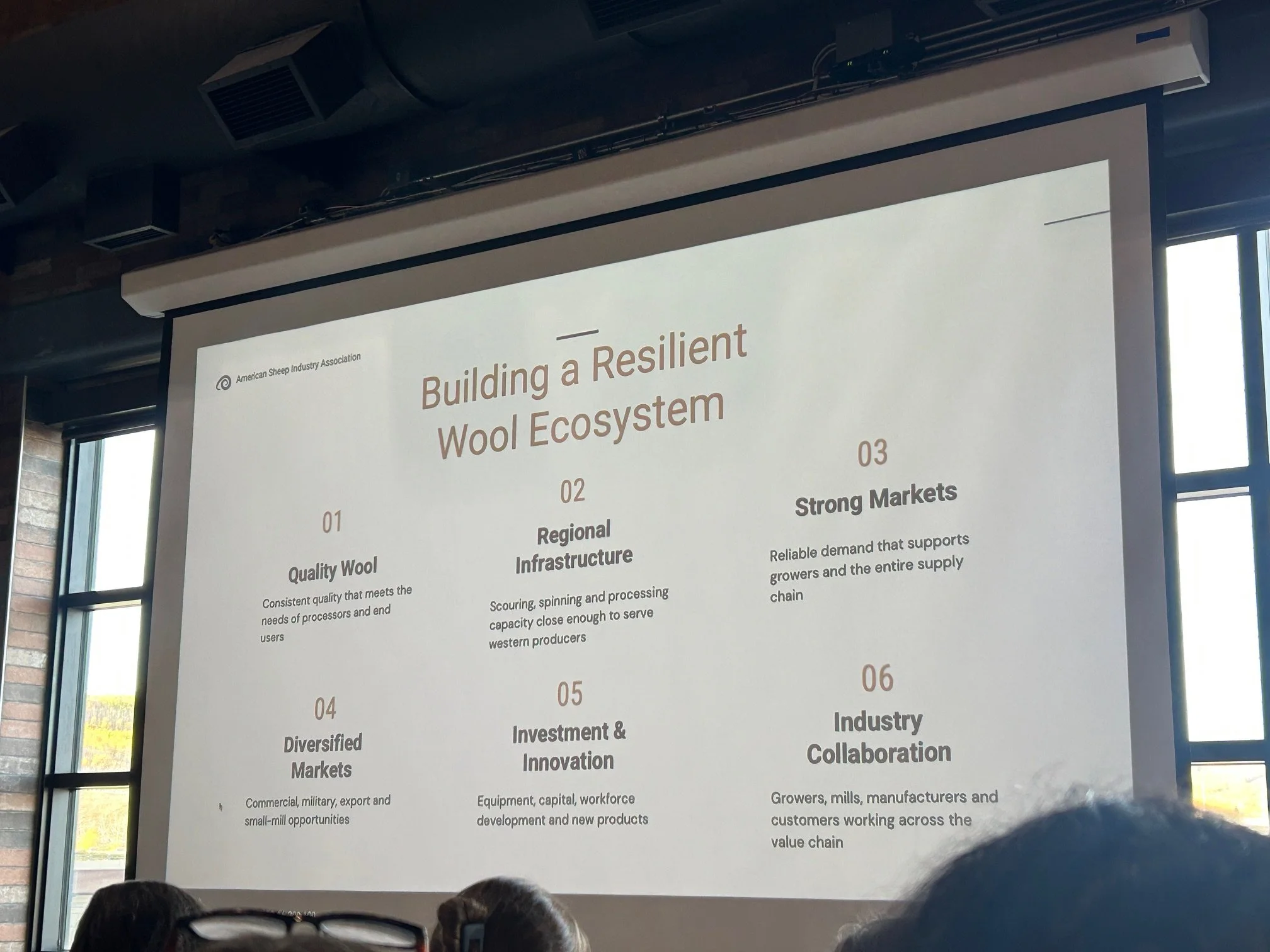
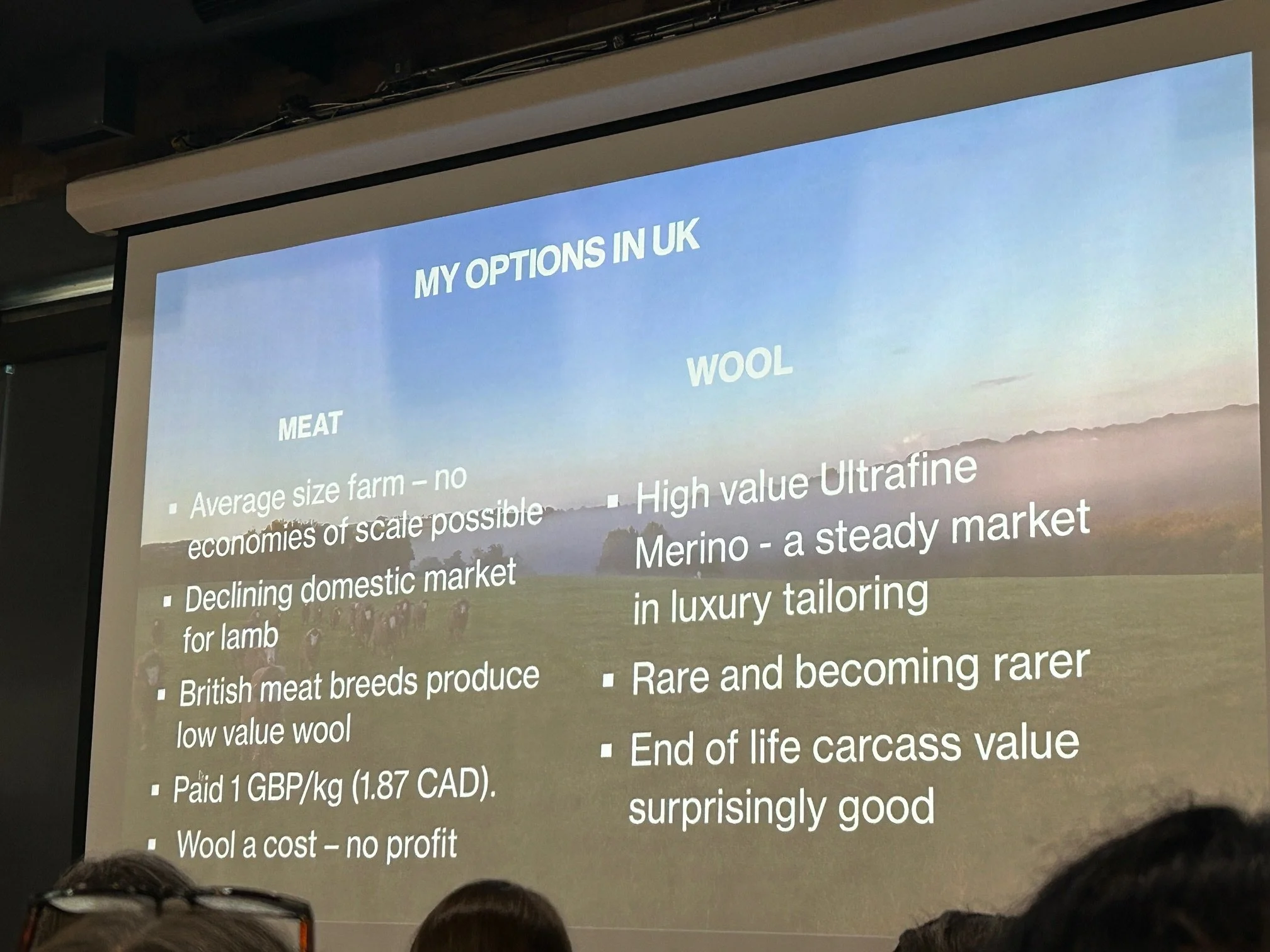
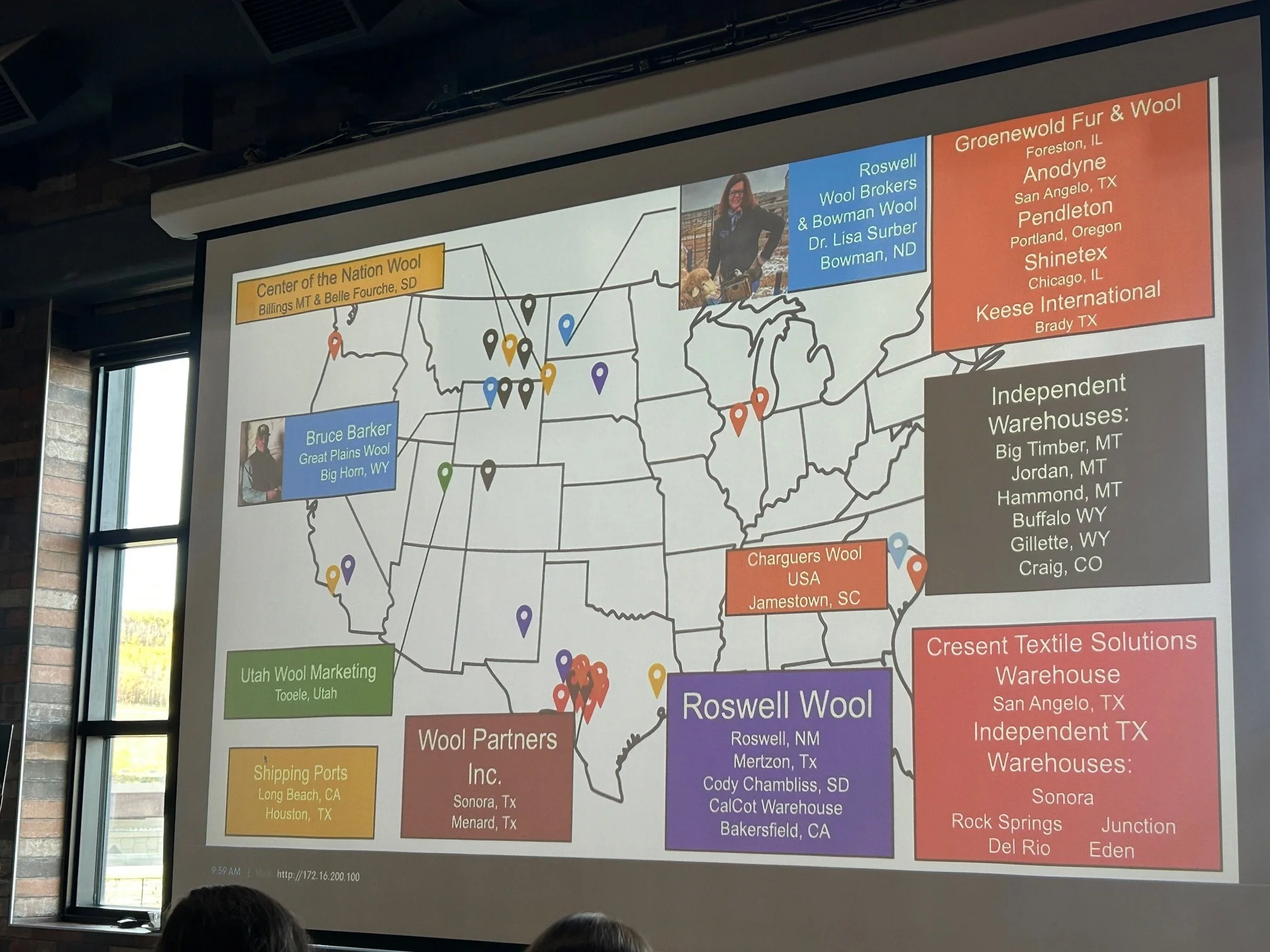
We heard from those in textile testing facilities about new opportunities and about how to export to other markets at a time when trade tensions are mounting with the US. And we heard from various businesses doing innovative and important things with wool in Canada.
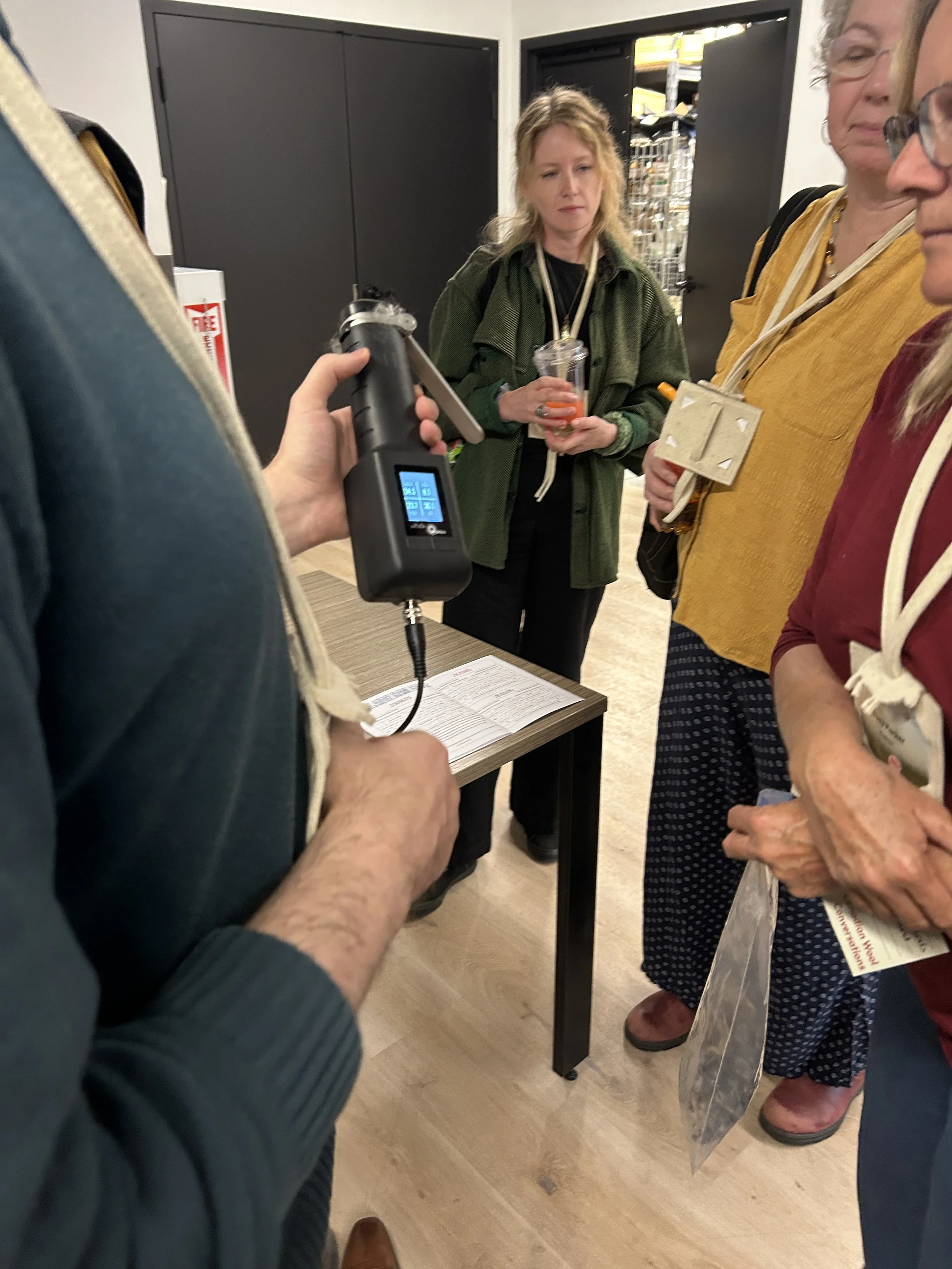
A hand-held Micron tester from Australia - can you imagine if we could do fast and efficient micron-testing on farm? How would this change breeding, marketing and product development?
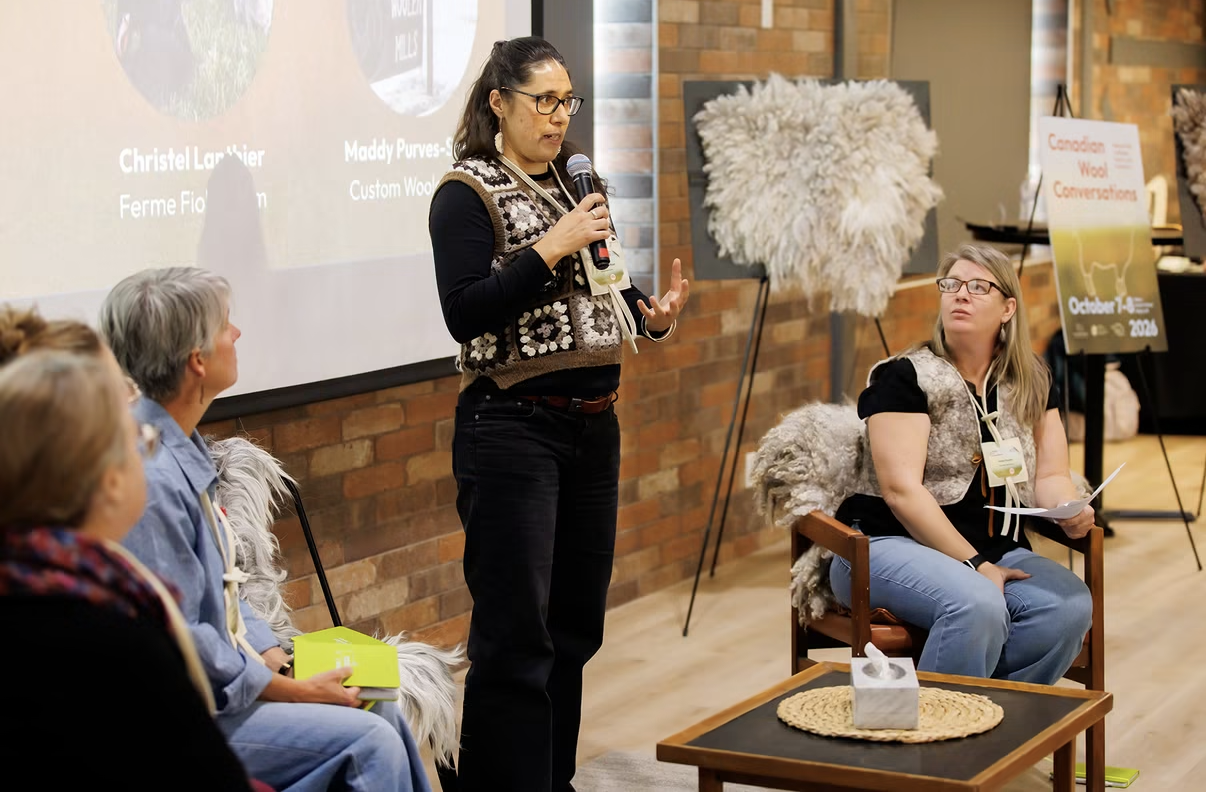
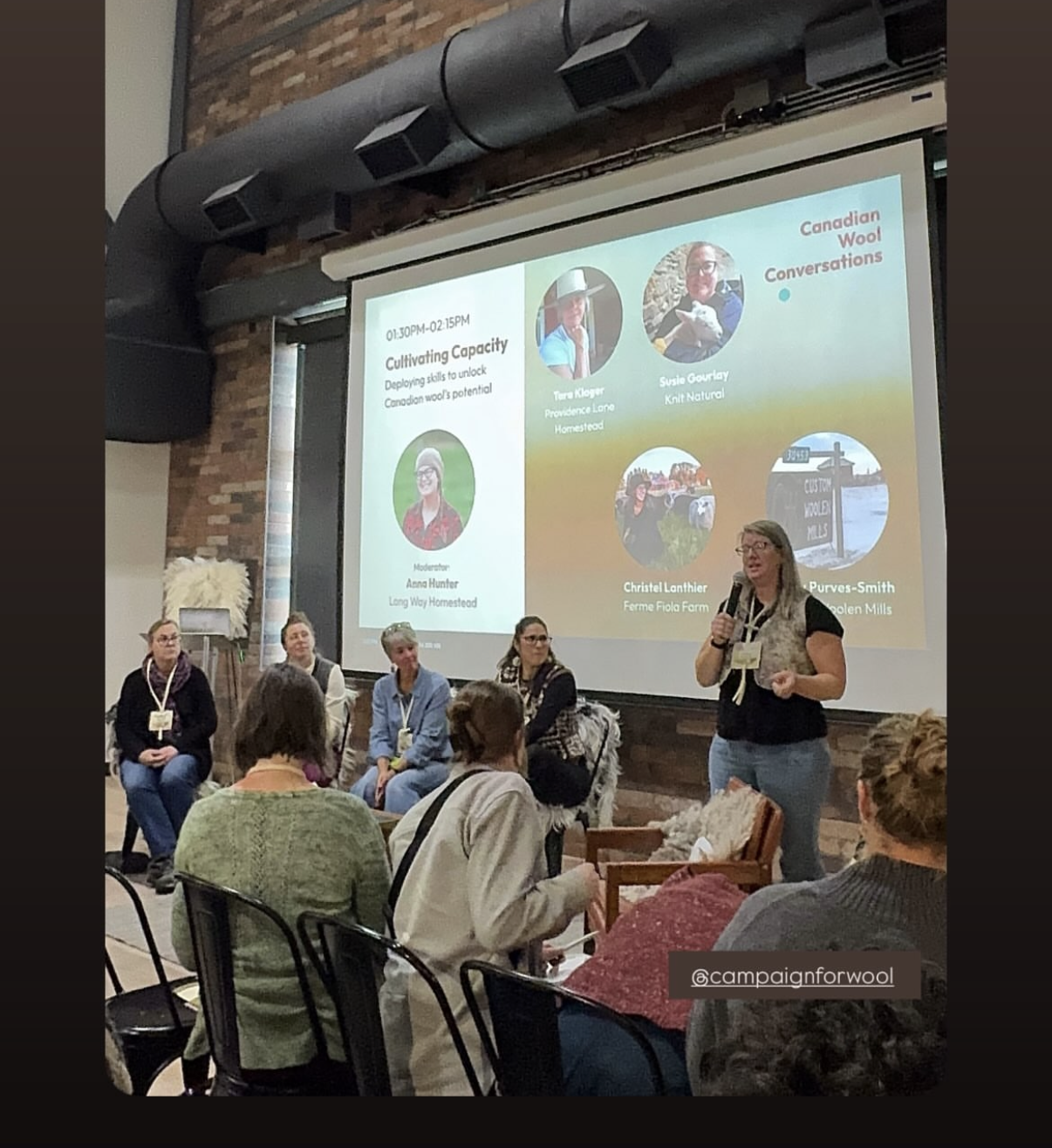
Perhaps my favourite part was the panel I had the honour to facilitate with Maddy Purves Smith from Custom Woolen Mills, Tara Klager from Providence Lane Homestead, Christel Lanthier from Ferme Fiola Farm and Susie Gourlay - Wool Judge and Educator. We were tasked with the topic of “cultivating capacity” but we took it as an opportunity to move the conversation beyond words and into action.
We put forward to the room that we already know many of the problems facing the Canadian wool industry—the question is what capacity do we need to actually do something about it? We wanted to move the conversation beyond listing the problems to what we can actually do about it - and what would it look like in 2 or 5 or 10 years. The take away from our panel was:
The knowledge on how to improve wool quality exists, but we need a coordinated and funded way for farmers to be taught - and compensated.
We need training for mill operators and millwrights that includes career potential and growth
The same way our land needs diversity and regeneration so does our industry, who isn’t at the table and who do we need to invite in.
We can’t solve what we don’t know - how mapping wool by region, breed and supply can lead to product development and reliable supply for buyers.
The afternoon sessions were focused on round table discussions of various aspects of the industry and I chose to participate in the ‘policy’ session. We were fortunate to have the Executive Director of ASI (American Sheep Industry) at our table who shared the ways that the Berry Amendment came to be in the USA and the influence that has had on the American wool industry.
The conversation around policy change is an important one to me - there are only so much we can do as individuals who are passionate if we don’t have systemic change. I was inspired to think beyond the small-scale actions and consider how a practical policy change could influence the procurement and purchasing of Canadian wool products.
It’s got my wheels turning in all the right ways…
My favourite part of the entire day was actually the ‘after-party’ when a few of us debriefed the day (and the industry) over a pint in the market. I think the real magic happens when those are doing the work get to sit together in the same room and actually TALK and DREAM about how to do things better. If nothing else - it makes us all feel a little less alone.
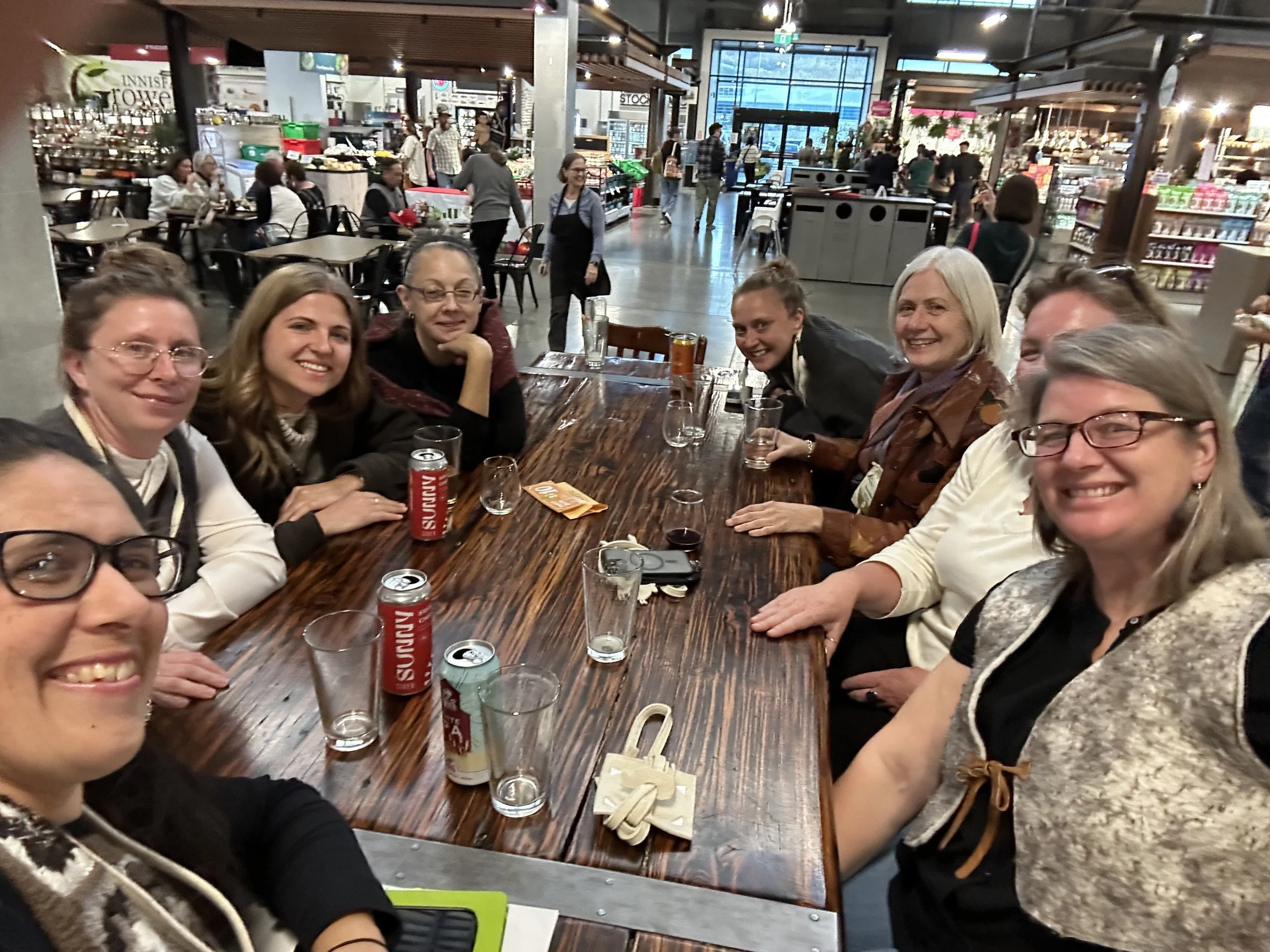
The wool industry in Canada is small - and spread out - and although things like the Canadian Wool Collective’s monthly coffee house and the various fibre festivals bring us all together - this is one of the only events that actually brings people together in one room. And that is so important. Here are the other take aways for me:
We can learn from other places while still focusing on a hyper-local solution.
WE NEED POLICY CHANGE
We need SMART solutions (specific, measurable, actionable, realistic and time-bound)
WE need each other
Christel and I drove home from Calgary to the farm(s) the next day - it’s a 13.5 hour drive and I don’t think we stopped talking once the entire way about how to do these things. And that’s what a conference should do - inspire you to make actionable change!