Breed Specific Knitting

Each breed of sheep produces a distinct type of wool for knitting and crochet. Understanding the qualities and characteristics of these breeds will inform and accentuate your knitting. Texture, colourwork, cables and drape are all affected by the unique wool breeds.
This workshop will explore the aspects and features of sheeps wool and provide an overview of some accessible single-breed wools and the variety they can offer to your knitting. We will dive into the history and tradition of these unique sheep breeds and their wool.
Breed Specific manual can be downloaded here.
Course Manual
Breed Specific manual can be downloaded here.
You can find the full text of the manual after the video.
This manual is Copyright 2024 Anna Hunter, Long Way Homestead
Course Video
Course Manual Content
Breed Specific Knitting
“All wool, whatever its characteristics, can be satisfactorily used for one purpose or another, but none can be satisfactorily used for every purpose” - In Sheep's Clothing
Why Breed Specific Matters
It helps preserve specific breeds, especially those that are rare and at risk.
Helps us learn more about wool and its characteristics so we can capitalize on the unique characteristics of that fibre, and inform our fibre arts.
Supports small farmers, small mills and small businesses.
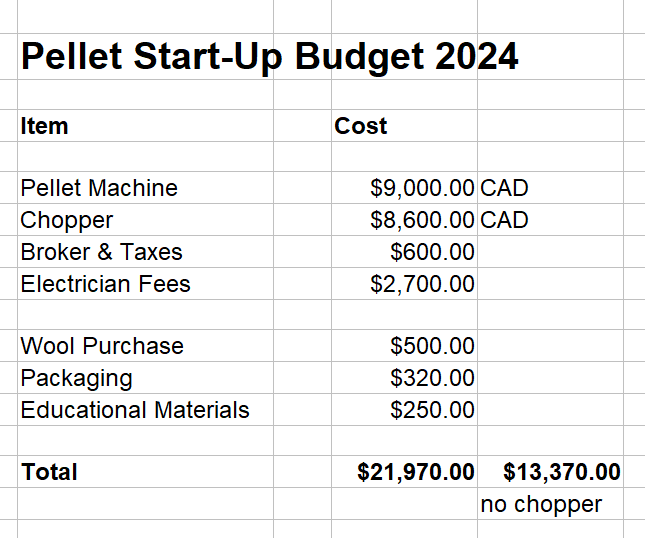
Many ask how long until you recuperate your costs, or what are sales like. I can only share our experience. We applied for and received a grant from our Provincial government. If you can find similar programs for agricultural processors it will help cover some of the early costs.
Here is a sample of our first two years of sales. We had very low overhead costs as we already had significant waste wool and didn't need to purchase much wool than the original $500.
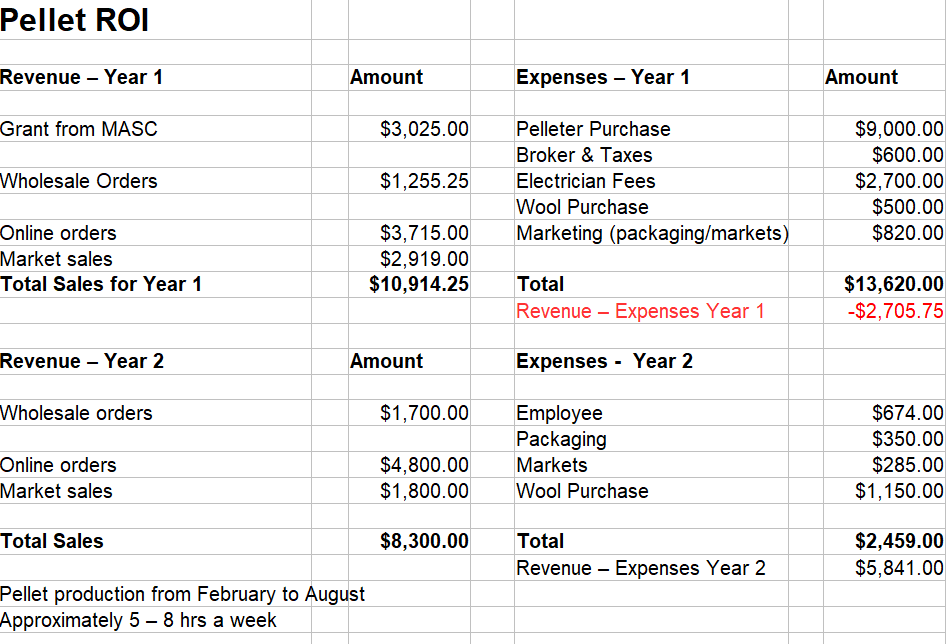
I believe that for us in our zone 3 growing season - the pellets will be a seasonal product only. So we will need our sales to be heavy between April and August.
Troubleshooting
Why are my pellets crumbling and not holding shape? - moisture is essential for pellets staying together. You can add water via a spray bottle to the hopper while making your pellets. It is more crucial to add moisture if you are pelleting in a colder/dry climate in winter.
How many pounds of pellets can I produce in an hour? - Without a chopper you should be able to constantly feed the hopper with wool and produce around 20-30lbs an hour (this includes some time for cleaning out the wrapping wool.
How do I use wool pellets in my garden? - You can directly apply wool when planting seeds - space your seeds out in your row and then sprinkle the wool pellets alongside your seeds. Cover up seeds and wool with soil. 1kg of pellets can be applied to approximately 20-25 square feet of garden.
Pre mix for pots – mix 1/2 cup pellets with 4 litres of soil and add to your pots. Plants that are already potted - sprinkle the wool pellets on the top of the plants and push them down. Or leave them on top for pest repellent (they will not break down as quickly on top of the soil).
How much garden will one bag of wool pellets cover? - 1kg of pellets can be applied to approximately 25 square feet of garden.
How long will wool pellets last in my garden? - When pellets are mixed with the soil they will start breaking down within 3 months. When used as a mulch it will take closer to 12 months to start breaking down. The nutrients in the pellets will release gradually and can last up to a year.
Will there be any transfer of weed seeds from the sheep fleece? - Definitely NOT. The heat used during the process of pelleting will destroy any seeds in the wool. It gets heated up to approximately 200 degrees farenheit
All information copyright Anna Hunter, Long Way Homestead 2024